PROJECT 01
How We Took Arc-en-ciel Atelier from 0 to 300K RON/Month
~300K RON/month
A tmrw. case study
In early 2024, Alexia was making beauty pouches in her dorm room. She’d gotten into what was then everywhere online — the “Clean Girl Aesthetic” — and couldn’t find a pouch that actually matched it: soft, clean, nothing trying too hard. So she made her own. The first one took about a week and was rainbow-print, which is where the name came from.
She started selling it the only way she could: through Instagram DMs. No website, no checkout, no email list — just a comment, a back-and-forth in messages, and a bank transfer. She’d put in about 200 RON to get started, so there wasn’t room for anything more built-out than that. By the time she’d worked through roughly 50 orders by hand, one at a time, she decided this needed to become an actual company.
That’s the point where she came to us, in March 2024. We had a real website live within seven days of our first conversation.
At a Glance
Started with ~200 RON invested and zero infrastructure.
Working together since March 2024.
Current run rate: approximately 300,000 RON/month, entirely self-funded — Alexia has reinvested over €80,000 in profit back into the business over time.
The email list has grown to 10,000+ subscribers and now drives 30% of monthly revenue. Channels managed: Email, Paid Social (TikTok + Meta), Fulfillment Operations.
Target for end of 2026: ~500,000 RON/month.
Why It Started Slow, On Purpose
We didn’t turn on paid ads the moment the site went live. For the first few months, growth came from organic — content, the email list we were building from scratch, and an audience that already knew the brand from the DM era responding well to having a real storefront behind it for the first time.
That wasn’t us being cautious for caution’s sake. Arc-en-ciel Atelier has never taken outside investment — every bit of growth capital has come from Alexia reinvesting profit back into the business. Spending heavily on ads before there was margin to fund it would have meant burning through the business’s only source of fuel. It made more sense to let organic prove the demand and generate the cash first.
By mid-summer 2024, that’s exactly what had happened — organic had built up enough traction and enough revenue to actually sustain ad budgets. That’s when paid social started.
Building the Engine
Email.
We built a full lifecycle program from the ground up: a welcome flow for new subscribers, abandoned cart recovery, post-purchase sequences to bring people back for a second and third order, and regular campaigns written in Alexia’s own voice — not a templated brand voice, hers specifically. The list has grown past 10,000 subscribers, and email now accounts for 40% of monthly revenue. It’s the single biggest channel in the business, ahead of paid social.
Paid Social.
Once there was budget to spend, we built out and scaled campaigns across both Meta and TikTok. Running both at the same time creates a quiet problem: each platform’s ad manager claims credit for sales the other platform also claims credit for, and left alone, that means spend follows whichever platform is better at overstating its own performance rather than whichever one actually drove the sale. We used TrackBee to unify attribution across both, so budget decisions were based on what actually happened.
Fulfillment.
Arc-en-ciel Atelier doesn’t hold stock. Everything is produced to order — mainly out of Alexia’s own production unit in Bucharest, with a partner factory in Pitești handling overflow — and ships within 1 to 4 days. At full capacity, that setup can turn out up to 100 garments a day. We built and manage the Shopify side of that process, which matters more than it sounds like it should: a brand that solves marketing but not fulfillment just finds a more painful way to fail once volume actually shows up.
The Product Line Grew Alongside Everything Else
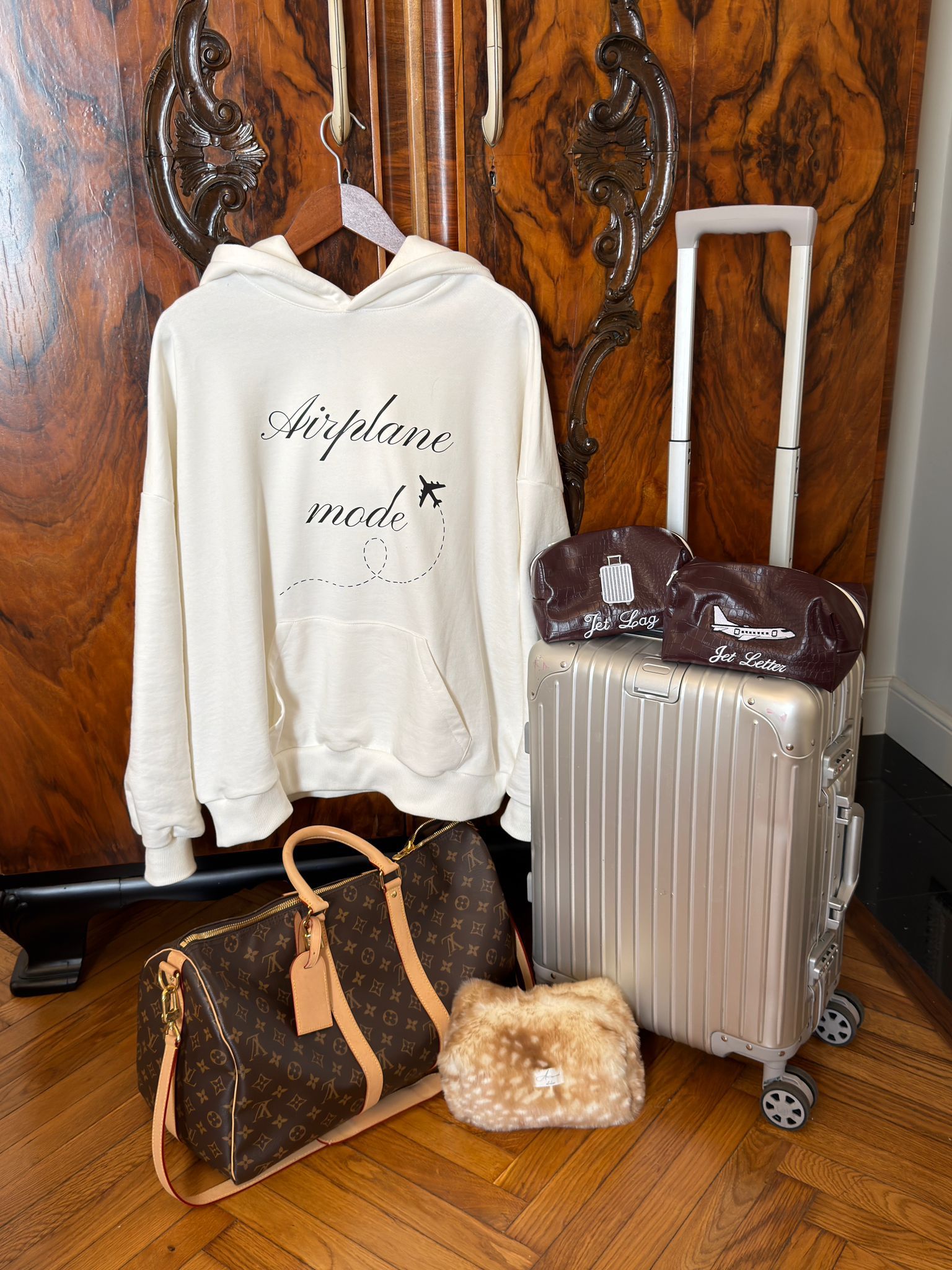
Arc-en-ciel Atelier started as a single product — that one beauty pouch design. It’s since grown into hoodies, t-shirts, capsule collections, full outfit sets, and seasonal drops, mostly oversized, one-size pieces with a soft, feminine, slightly playful identity running through all of it. A bigger catalog gave email and paid social more to actually sell, and gave repeat customers a reason to come back beyond just liking the brand.
Visibility That Came From the Brand Itself
Some of what’s helped this grow didn’t come from us, and it’s worth being straight about that. Arc-en-ciel Atelier was featured in Ziarul Financiar’s Gen Z series, and at one point Maybelline New York reached out directly to collaborate on a custom run of beauty pouches for a product launch — neither of those came from outreach on our side. They came in because the brand had built up enough visibility on its own to attract that kind of attention.
PR and creator partnerships are something we’re actively building out now, not a channel we can point to results from yet. The Maybelline collaboration is a good sign of what’s possible there, but it’s not something we’re claiming credit for.
Where Things Stand Today
Grew from selling through Instagram DMs to a ~300,000 RON/month current run rate, all self-funded through reinvested profit
Built an email list of 10,000+ subscribers that now drives 40% of monthly revenue
Runs paid acquisition across both TikTok and Meta with unified, trustworthy attribution
Operates a no-stock production model shipping in 1–4 days, with capacity for up to 100 garments a day
Expanded from a single product to a full catalog of hoodies, tees, sets, and seasonal collections
Grown to a team of roughly 10 people
Targeting ~500,000 RON/month by the end of 2026
If You’re Running a Brand Like This
If any part of “where this started” sounds familiar — real product-market fit, a following that already buys, and none of the infrastructure to turn that into something that scales — the gap usually isn’t the brand itself.
One thing worth taking from this specifically: there’s no rule that says paid acquisition has to come first, or that growth capital has to come from outside the business. Letting organic prove the demand and fund the next stage kept this growth honest the whole way through, rather than dependent on outside money that could get pulled.
Want this for your brand? If you’re running a boutique or DTC brand and want a real growth engine instead of guesswork, apply now.